Online Scams Are Crossing Borders: How to Protect Yourself Before You Trade
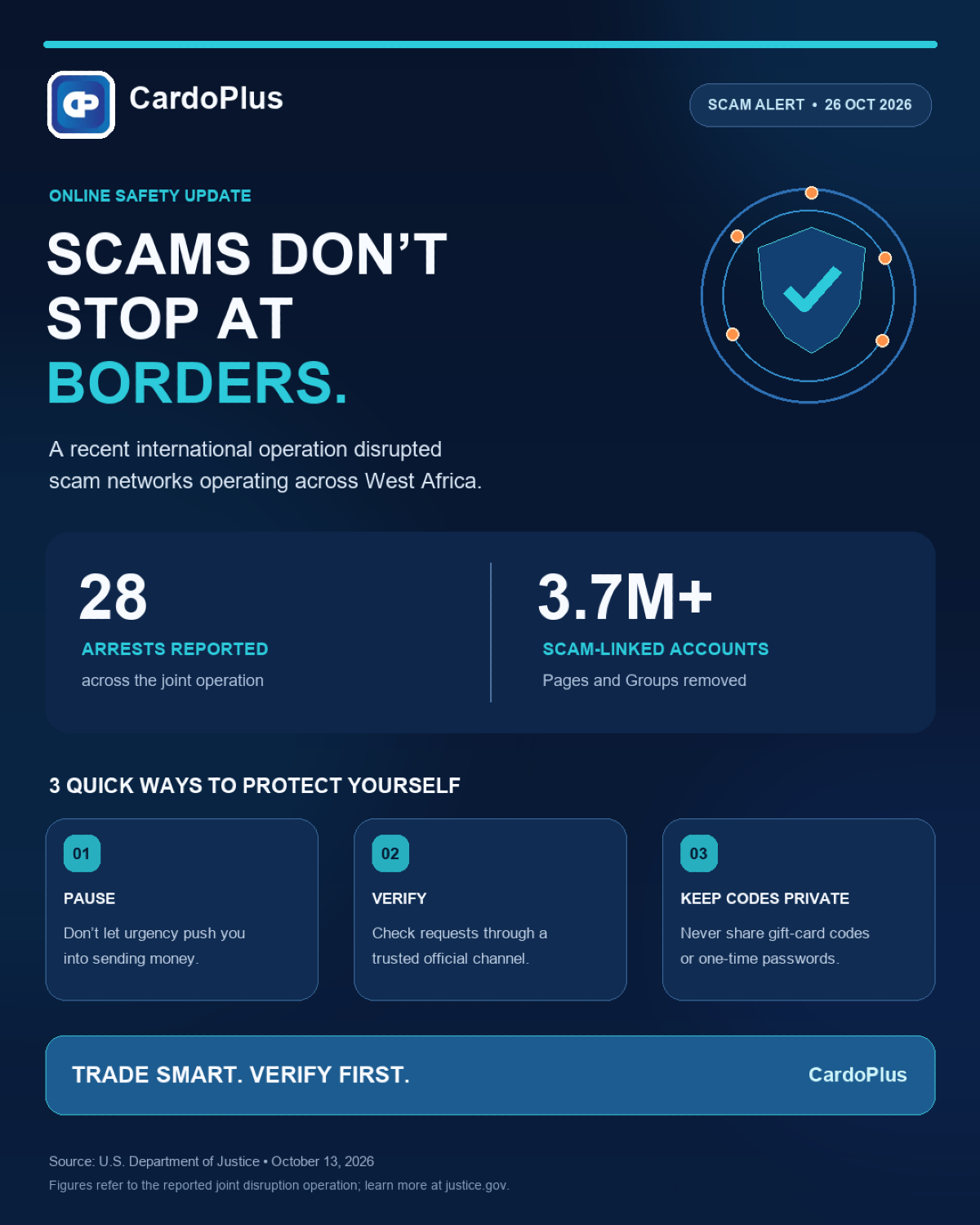
Online scams can begin with a friendly message, a tempting offer, or a warning that demands urgent action. Recent law enforcement activity shows how wide these schemes can reach: an international operation targeting scam networks in West Africa led to arrests in Nigeria and Ghana and the removal of millions of scam-linked social media accounts.
The operation targeted several kinds of fraud, including impersonation, extortion, and cryptocurrency investment scams. The details differ, but many schemes rely on the same pressure tactics: build trust, create urgency, then push someone to send money or share sensitive information.
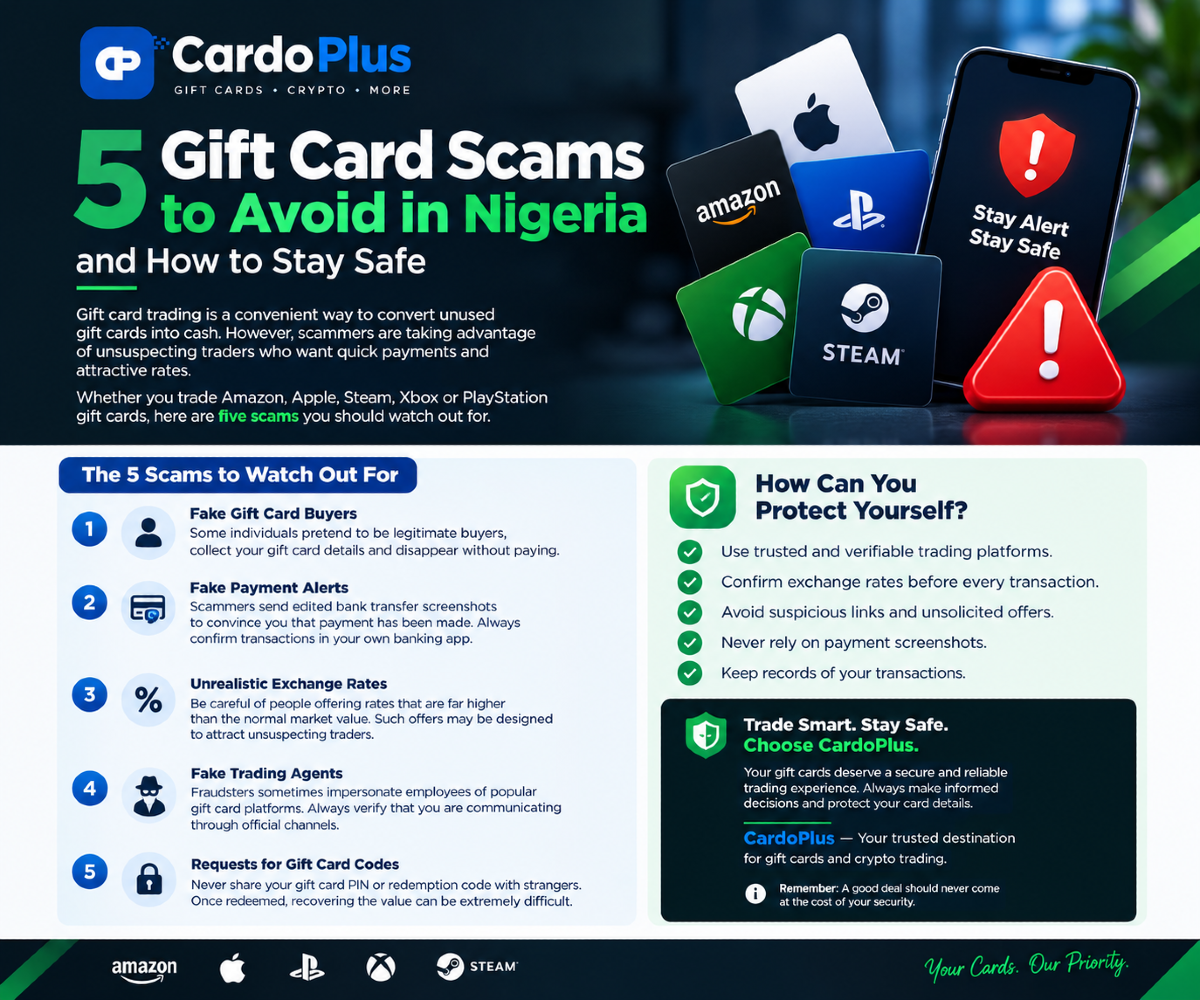
If you trade gift cards or make deals online, pause before you act. Check that you’re speaking with the real person or business through its official contact details. Be wary of strangers who ask for gift card codes, passwords, one-time verification codes, or payment through unusual methods. The FTC says an unexpected demand to pay by gift card, cryptocurrency, wire transfer, or payment app is a scam warning sign. FTC guidance
A few simple habits can help:
- Don’t let a stranger rush you into a payment or trade.
- Verify the other person through a separate, trusted channel.
- Read the platform’s terms and understand how its payment process works.
- Keep screenshots and transaction records.
- If something feels off, stop and ask someone you trust before sending anything.
The recent crackdown is a reminder that online fraud is a cross-border problem. Staying alert, checking claims independently, and refusing pressure can help protect your money and your accounts.